

When September arrives and night temperatures start to dip, many urban gardeners make the mistake of simply walking away: dead annuals left in balcony boxes, neglected raised beds, and smart tap timers left attached to outdoor spigots. Come springtime, the consequences are painful—cracked solenoid valves, rotten roots, and rock-hard, nutrient-depleted soil.
Experienced gardeners know that proper autumn prep lays the groundwork for next season’s vigorous harvests and lush blooms. You don’t need weeks of exhausting labor, but there are 4 essential steps and reliable tools that must be deployed before the first hard freeze.
1. Plant Hygiene & Autumn Pruning: Stop Fungal Infections Early
Your first priority is cleanup. Clear spent annuals from planters and prune back leggy, dead, or powdery-mildew-infected stems right at the base.
Inspect potted oleanders, pelargoniums, and sensitive herbs for pests (spider mites, scale insects) before bringing them into winter quarters. A single infected plant brought into an indoor overwintering room will rapidly cross-contaminate everything!
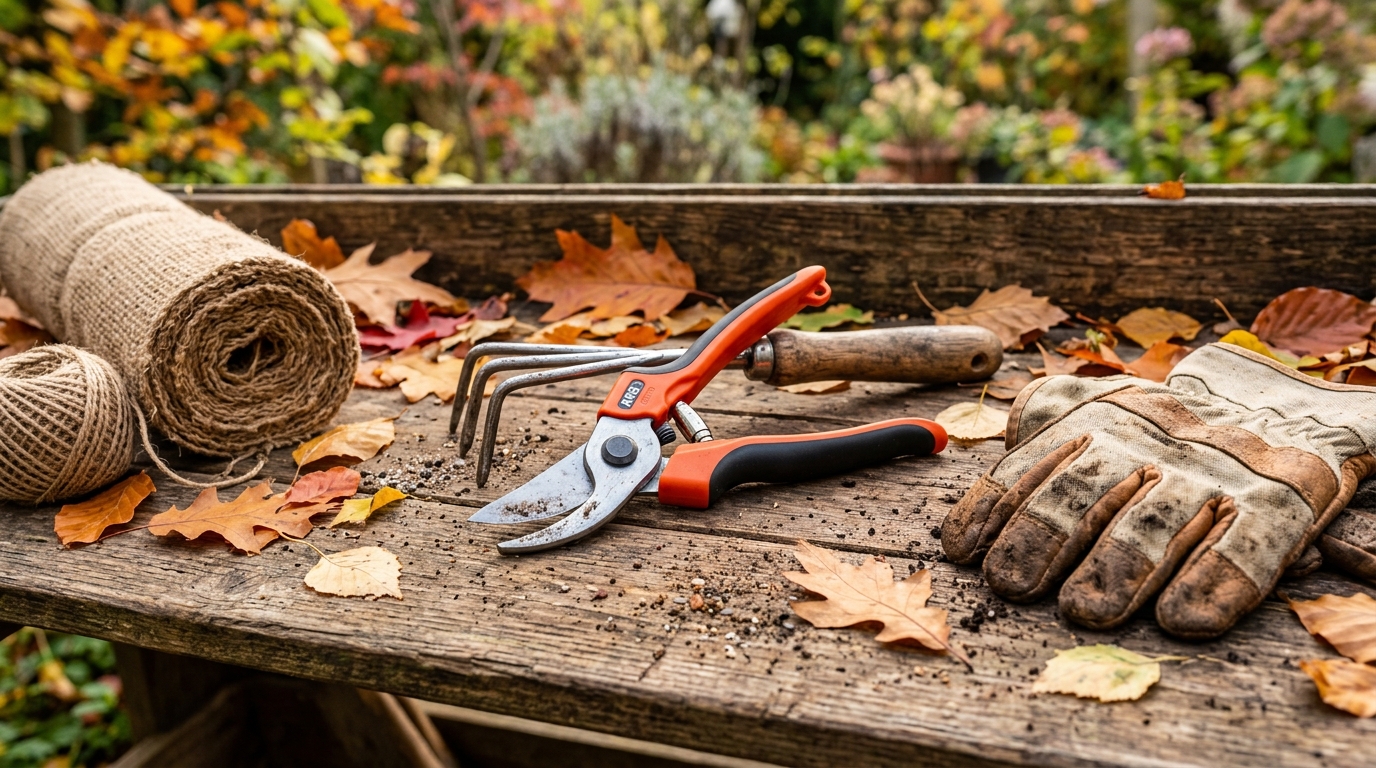
💡 Gardener’s Golden Rule for Pruning: Never use dull, crushing blades! Crushed plant stems invite fungal pathogens in humid autumn weather. Always work with razor-sharp bypass pruners.
2. Safeguarding Soil: Organic Nutrients & Deep Straw Mulching
In raised beds and large balcony containers, soil microbiome life (beneficial bacteria, fungi, earthworms) remains active underground. Leaving soil bare exposes it to wind erosion and heavy rains that leach away essential minerals.
- Organic Feeding: Spread 1–2 inches of well-aged compost, manure, or slow-release organic pellets over the soil surface. No deep tilling needed—earthworms will incorporate it naturally.
- Heavy Mulch Blanket: Apply a 2–3 inch layer of clean straw or shredded bark mulch. This keeps root temperatures 5–8°F warmer, shields perennial herbs (rosemary, thyme) from freezing winds, and prevents winter soil compaction.
3. Winterizing Automatic Drip Systems (Prevent Costly Freeze Cracks)
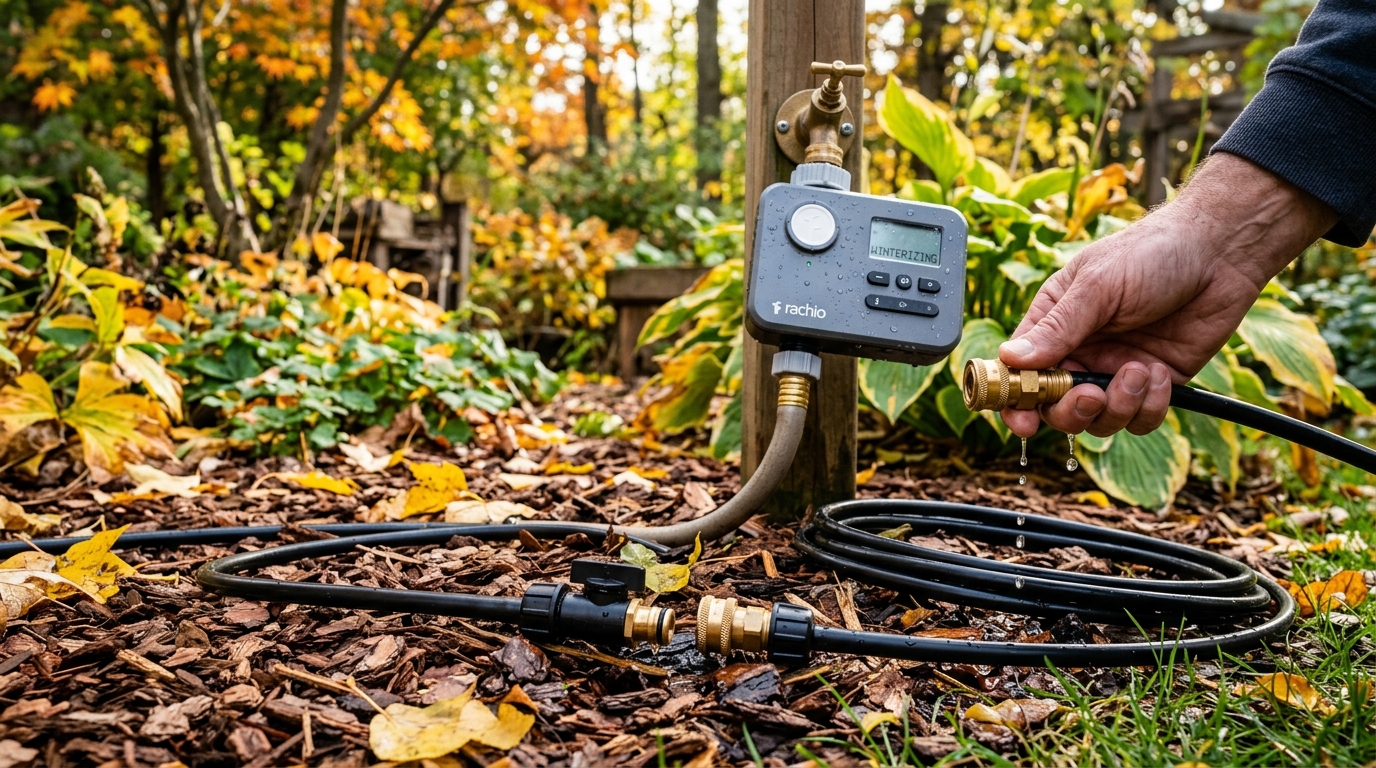
This is the number one cause of costly garden equipment damage. Water expands as it freezes, splitting heavy-duty brass valves and plastic controller housings alike. Follow these steps before the first freeze:
- Shut Off & Disconnect: Turn off the main garden water supply. Detach your smart tap timer (Gardena, Eve Aqua, RainPoint), remove the batteries, and store the unit indoors in a freeze-free room.
- Drain Drip Tubing: Open the end plugs on your micro-drip feeder lines and elevate the pipes so gravity discharges any trapped water pockets.
- Clean & Store Pumps: If using AC condensate or rainwater pumps, rinse filter screens with clean tap water, dry thoroughly, and store in a dry location.
📋 Essential Tools & Equipment Checklist
Have these essentials ready before starting your autumn prep:
- Sharp Bypass Pruning Shears (for clean cuts on woody and soft stems)
- Hand Cultivator / Mini Trowel (for incorporating compost into container soil)
- Hand Rake / Small Broom (for sweeping fallen leaves from decking and patio)
- Jute Frost Wrap & Coconut Mulch Discs (for insulating container root balls)
- Clean Straw or Bark Mulch (for winter soil insulation)
- Drainage Fitting / Quick-Release Connector (for winterizing drip lines)
🏷️ Field-Tested Hardware & Partner Recommendations
We recommend durable, field-tested tools built for multiple seasons of heavy use:
1. Precision Pruning & Container Tools
- Fiskars PowerGear X Bypass Pruner: Patented gear mechanism delivers up to 3x more cutting power, cleanly slicing through 1-inch branches with minimal hand fatigue.
- Fiskars Solid Hand Tool Kit: Rust-proof, fibercomp-reinforced lightweight trowel and cultivator for balcony planters and raised beds.
2. Drip System Winterizing & Frost Protection
- Gardena Micro-Drip Automatic Drain Valve: Opens automatically whenever water pressure drops below 0.2 bar, draining residual moisture before freezing temperatures hit.
- Gardena smart Water Control System: Features built-in frost warning alerts and a quick-release union for 5-second detachment before winter.
3. Off-Grid & Solar Systems
- RainPoint Solar Automatic Drip Irrigation Kit: Modular off-grid solar controller easily disassembled for winter storage.