

Alright, let’s say you’re one of the lucky ones who actually has a pressurized outdoor spigot on your terrace or out at the cabin. You get to skip the water buckets and solar pump setup because water pressure is already there. But if you aren’t around every day, something still has to turn that spigot on and off.
A lot of folks walk into a home improvement store and grab a cheap, mechanical $15 dial timer. They set it to spray every evening at 8 PM. Two months later, they open their water bill or find root-rotted plants and wonder what went wrong. A dumb timer is blind: it opens the valve even during torrential downpours when the soil is already soaked mud. It’s a total waste of money.
A proper smart controller checks local weather forecasts (or soil sensors) and skips watering when it rains. Here are the three models I can genuinely recommend from hands-on trade experience.
1. Gardena smart Water Control Set – The Premium All-Rounder
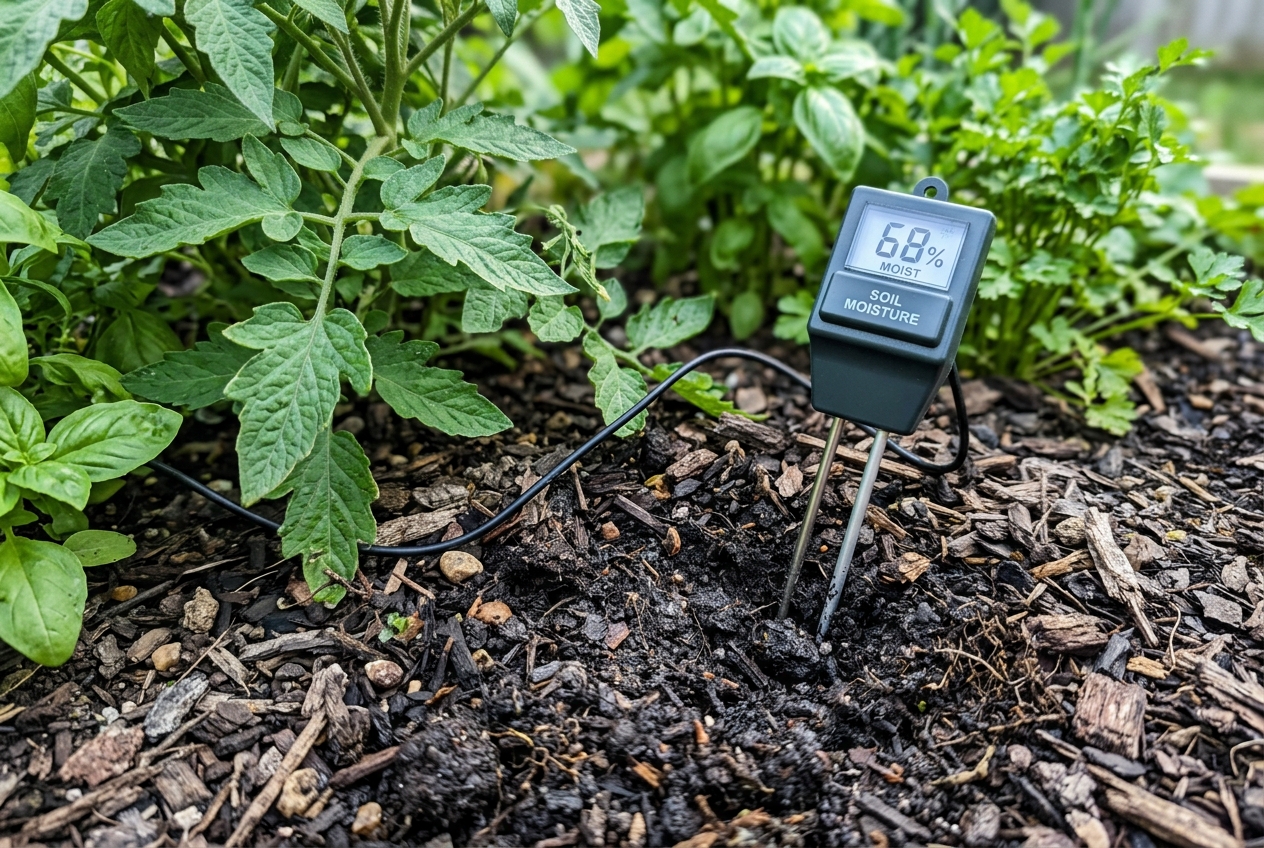
This is the Mercedes of the category. The package includes an outdoor tap valve, a central smart Gateway, and most importantly: a precision soil moisture sensor.
- Why I like it: You stick the sensor right into the soil next to your plants. It doesn’t guess weather from satellite estimates—it measures raw ground truth. If the root zone is damp, the valve stays shut. Period.
- The drawback: It’s an investment, and it requires plugging their proprietary Gateway hub into your home router.
- Who it’s for: Anyone who wants zero compromises, German build quality, and an ecosystem that can later connect to robot mowers and smart power plugs. 👉 [Your Affiliate Link Goes Here]
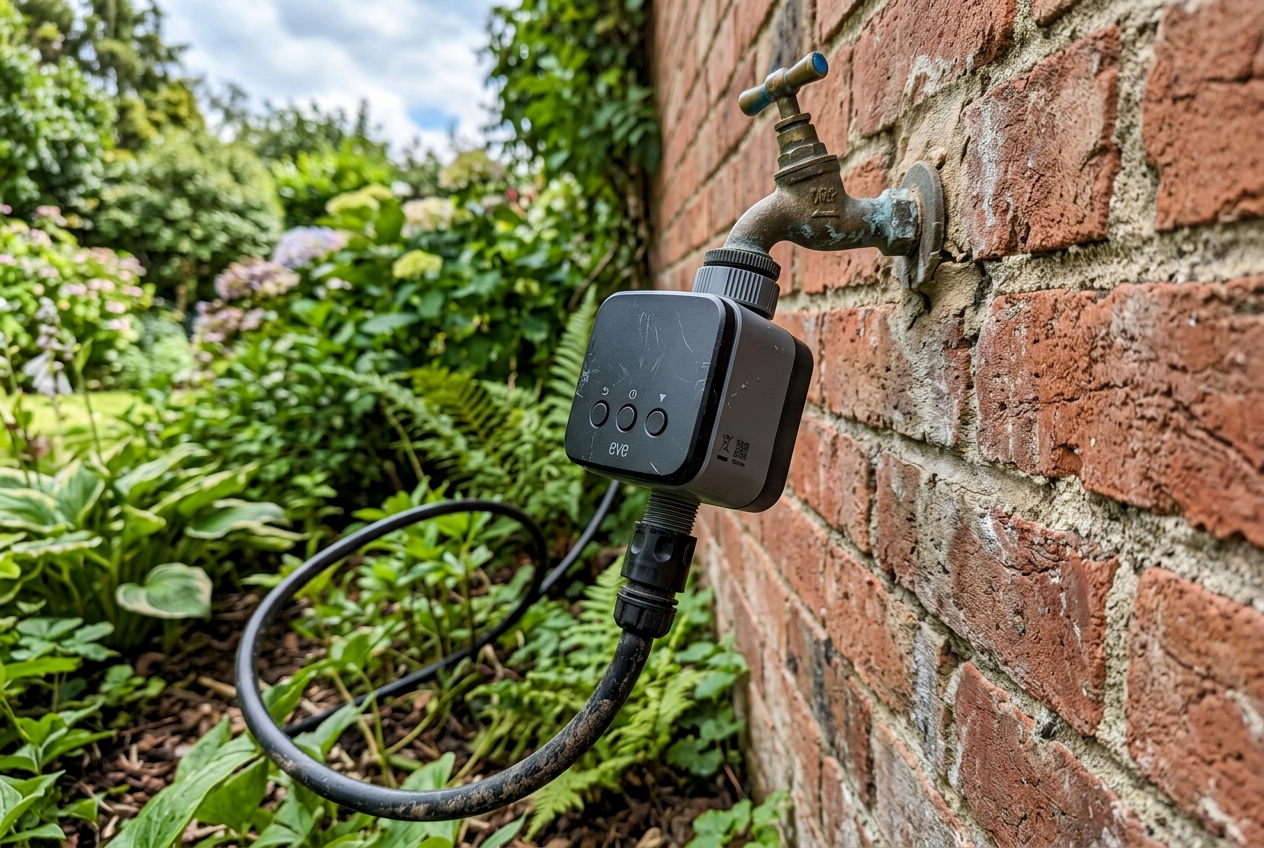
2. Eve Aqua (Matter Version) – Best “Screw On & Forget It” Value
If you don’t want extra bridge hubs or messy wiring, this is the one to get. You thread it onto your standard 3/4-inch spigot, attach your drip hose, connect via smartphone in 30 seconds, and you’re done. The latest hardware iteration uses Thread and Matter, meaning it talks effortlessly with Apple Home, Google Home, and Alexa.
- Why I like it: No hub required. Its internal hardware clock ensures schedules run reliably even if cabin WiFi drops out.
- The drawback: Controls only one zone. If you want separate schedules for lawn sprinklers vs. potted planters, you’ll need two units and an outdoor Y-splitter.
- Who it’s for: Patios, raised planter beds, and balconies with a tap where clean aesthetics and ease of use matter most. 👉 [Your Affiliate Link Goes Here]
3. Hunter HC Hydrawise – The Heavy Artillery for In-Ground Systems
If you have a large cabin lawn with underground PVC piping, solenoid valves, and pop-up rotor heads, skip the faucet toys. This is the commercial industry benchmark.
- Why I like it: Controls 6 to 12 distinct irrigation zones. It pulls hyper-local weather station data and calculates real daily evapotranspiration to meter exact replenishment.
- The drawback: You don’t set this up in 5 minutes. It requires low-voltage electrical wiring and basic irrigation know-how.
- Who it’s for: Dedicated larger properties with multi-valve manifolds in underground valve boxes. 👉 [Your Affiliate Link Goes Here]
Real-World ROI: Does Smart Control Actually Pay Off?
Let’s do the math. A typical small garden or lawn consumes tens of thousands of gallons through a hot summer. A dumb timer running blind will easily pump through ~30,000 gallons (120 m³) across a season because it waters regardless of rain.
A smart controller using weather skips and soil feedback dials that down to ~19,000 gallons (75 m³). That’s an average savings of 11,000+ gallons (45 m³) in a single season. Depending on your local water and sewer rates, the device pays for itself in 1 to 2 seasons max—not to mention sparing you from replacing expensive root-rotted greenery.
FAQ: Questions I Get Asked All The Time
What happens if the internet goes down at the cabin? Don’t panic, your garden won’t die. These devices store active schedules directly in local onboard memory. If WiFi drops, they can’t fetch rain skips, but they will reliably execute the baseline watering schedule offline.
How do I winterize outdoor faucet timers? My friend, remember this rule: before the first autumn freeze, remove tap controllers from the spigot! Drain any residual water from the valve cavity, pull the AA batteries out, and store the unit in a heated garage or closet. If left outside in sub-zero frost, expanding ice will crack the internal valve housing in seconds, and you’ll be buying a replacement come spring.