
Emerald green thujas (arborvitae) and dense living hedges (like cherry laurel or privet) are the pride of any backyard or terrace perimeter: they offer privacy, block dust, and buffer street noise. But by mid-summer, many homeowners watch in horror as inner foliage turns crisp, brown, and brittle.
Most assume a mystery pest or blight is at work. In over 80% of cases, the culprit is far simpler: improper surface watering.
Why Evening Hose Spraying Fails
When you stand in the yard with a hose nozzle and spray the exterior of a hedge:
- Dense needles act as an umbrella: Most water bounces off outer branches and evaporates in the warm breeze before reaching soil.
- Humid foliage encourages fungus: Wet leaves trapped in humid summer evenings invite fungal rot and blight.
- Shallow roots: Moisture only wetting the top inch forces roots upward, leaving the tree defenseless against sudden heatwaves.
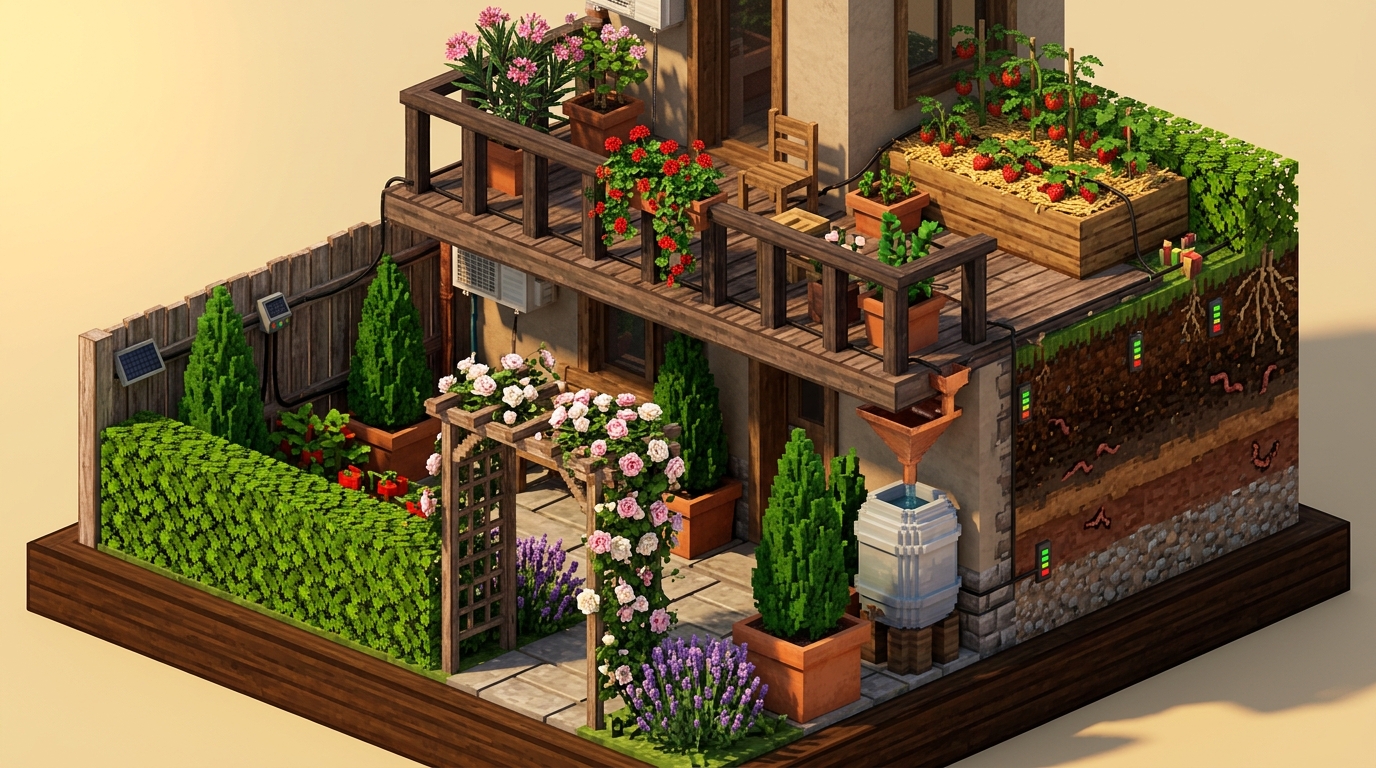
The Fix: Pressure-Compensated Drip Tubing at the Base
Evergreens don’t need a shower—they need slow, deep ground soaking.
The professional approach:
- Lay a 1/2-inch (16mm) drip line 4–6 inches from the tree trunks along the entire hedge row.
- Cover with 2–3 inches of bark mulch: This shields the tubing from UV breakdown and locks moisture into the earth.
- Run 2–3 times weekly for 45–60 minutes: Deep soaking reaches 12–16 inches down into the core root ball.
Smart Solar Automation
If you don’t have outdoor electrical outlets near the fence line, a solar-powered micro-pump connected to a rainwater or AC condensate barrel can easily hydrate 15–20 thujas and 30 feet of hedge completely off-grid.