

Listen up. In the previous guide, we covered how to build an off-grid solar drip system so your plants don’t shrivel up while you’re enjoying summer vacation. But there’s still one catch: the pump needs a steady supply of water.
You could haul heavy watering cans from your kitchen sink and pay municipal water rates, but why bother when technology and nature hand you gallons of free water every single day? Let’s close the loop and make the system 100% self-sufficient.
The City Balcony Goldmine: AC Condensate Water
When summer heatwaves hit, you crank up the air conditioning. That’s the exact moment your balcony plants are thirstiest. Conveniently, an average home AC unit pumps out 1.5 to 3 gallons (5–10 liters) of clean condensation runoff on any typical hot day.
In most apartment buildings, that water just drips onto the sidewalk or annoys the downstairs neighbors. But if you route that clear drain hose straight into the 5-gallon bucket powering your solar drip pump, you’ve built an infinite water refill loop. Zero utility cost, zero bucket lugging. The system literally feeds itself.
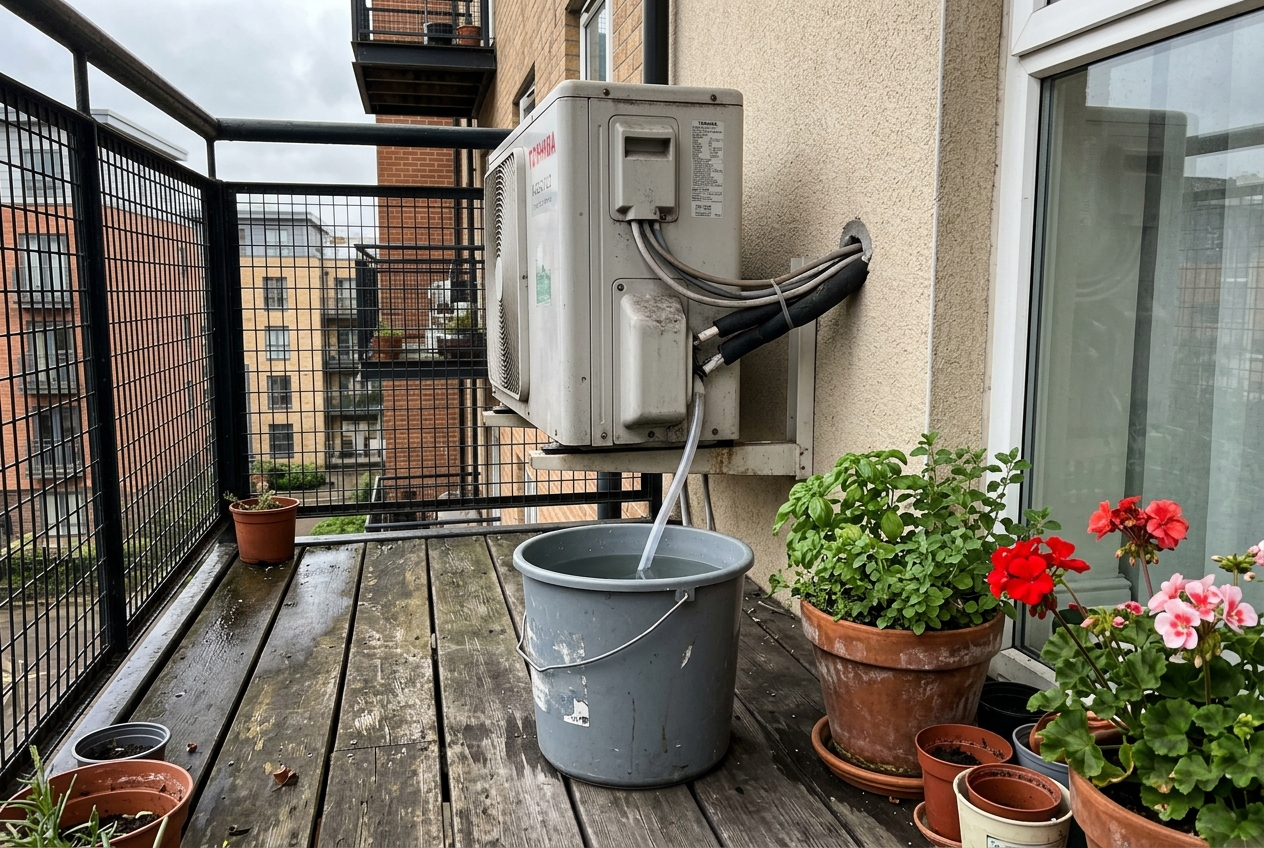
The Pro Trade Secret Most People Miss: There is one vital catch you must know. Air conditioner runoff is essentially distilled water. It’s clean, but completely devoid of minerals. If you water your geraniums or container vegetables exclusively with AC runoff for weeks, soil nutrients leach out and the plants will starve.
The fix? Drop a slow-release fertilizer spike into the soil or mix liquid organic plant food into the bucket. That way, the water doesn’t just hydrate—it feeds.
The Country Cabin Hero: Rainwater Harvesting Done Right
If you’re out at a weekend plot or cabin with a roof, rainwater is unbeatable. Letting roof runoff spill uselessly into the lawn is a waste. A simple downspout diverter channels rainwater straight into a 50-gallon barrel that feeds your solar pump for weeks.
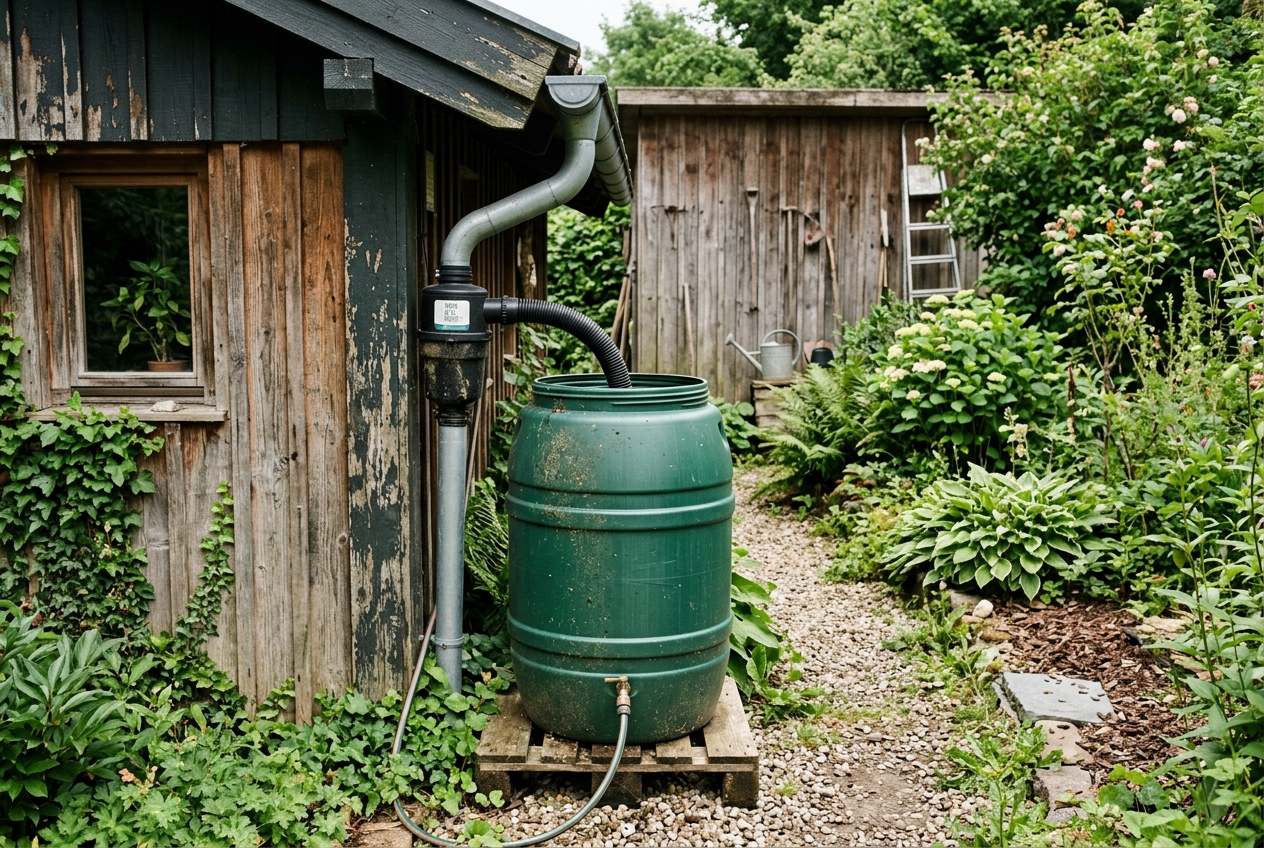
The Costly Trap to Avoid: Compact solar irrigation pumps use precision micro-valves. If leaves, roof grit, or debris wash down from your gutters into the barrel, that pump will seize up in 48 hours. When feeding an automated drip system from rain barrels, an inline downspout mesh filter and a sealed lid are non-negotiable.
The Complete Zero-Grid Loop
Combine these pieces, and you have an automated micro-garden that stays alive completely off-grid. The sun supplies free power, the AC or sky supplies free water, and the drip pump meters it out. You get to enjoy your vacation guilt-free.
Essential Gear for This Project:
1. For the AC Balcony Setup: Balanced Plant Nutrition & Spikes Since AC runoff has zero mineral content, replenishing nutrients is mandatory. Slow-release spikes or concentrated liquid plant food keep foliage vibrant. 👉 [Your Affiliate Link Goes Here]
2. For Cabins & Sheds: Filtered Downspout Rain Diverter Don’t mess with wire mesh and pantyhose. A dedicated diverter with a clean-out filter costs little and saves your pump from costly clogs. Takes 10 minutes to install. 👉 [Your Affiliate Link Goes Here]
3. If You Need Compact Storage: Collapsible Rain Barrel If you don’t want a heavy, bulky blue plastic drum cluttering your patio, heavy-duty collapsible PVC barrels fold away for winter storage and include built-in spigots. 👉 [Your Affiliate Link Goes Here]