

My friend, it’s the exact same story every single summer. Spring rolls around, you spend good money stocking up your balcony: gorgeous oleanders, thujas, fresh herbs, geraniums—everything you love. Then July heat hits, you take off for a long weekend, and by the time you get back, your plants look like dehydrated kindling.
The real kicker? There’s never a water tap or an electrical outlet where you actually need one. Begging neighbors every week gets old fast, and those self-watering planter boxes throw in the towel after two days in 95°F heat. That’s when you feel like apartment balconies and weekend cabins are actively working against you.
Here’s the setup that finally made me smile: an off-grid solar drip irrigation kit. No plumbing, no wiring, no knocking holes in walls. You drop a 5-gallon bucket in the corner of the balcony (or a barrel out at the cabin), and you’re set.
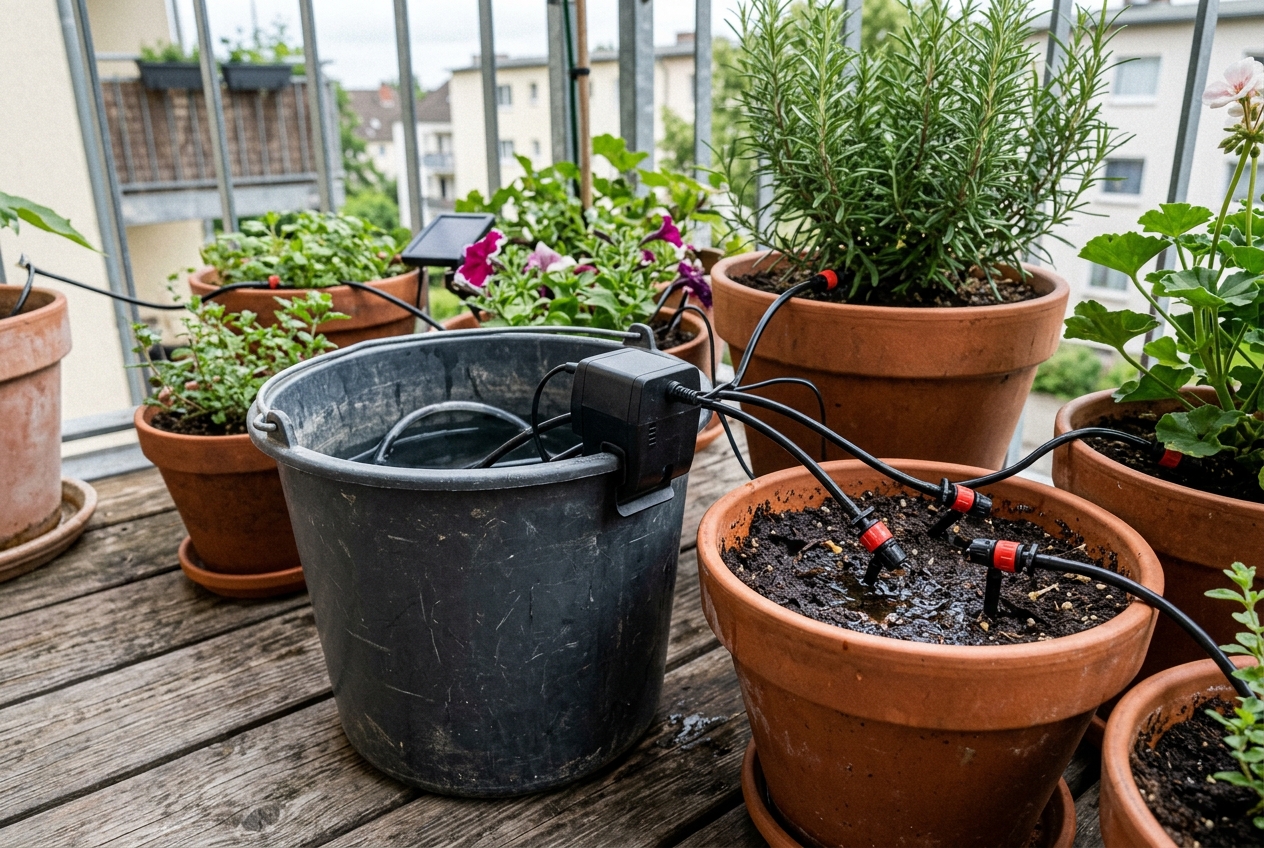
The heart of the system is a compact pump unit with an integrated solar panel and a rechargeable battery. The setup is dead simple: toss the intake tube into the water bucket, run the thin micro-tubing to your pots, and push the stakes into the soil. The solar panel tops up the battery during the day, and the timer kicks in automatically at your scheduled hour.
It delivers water right where it counts: directly to the root zone. No overspray, zero evaporation waste.
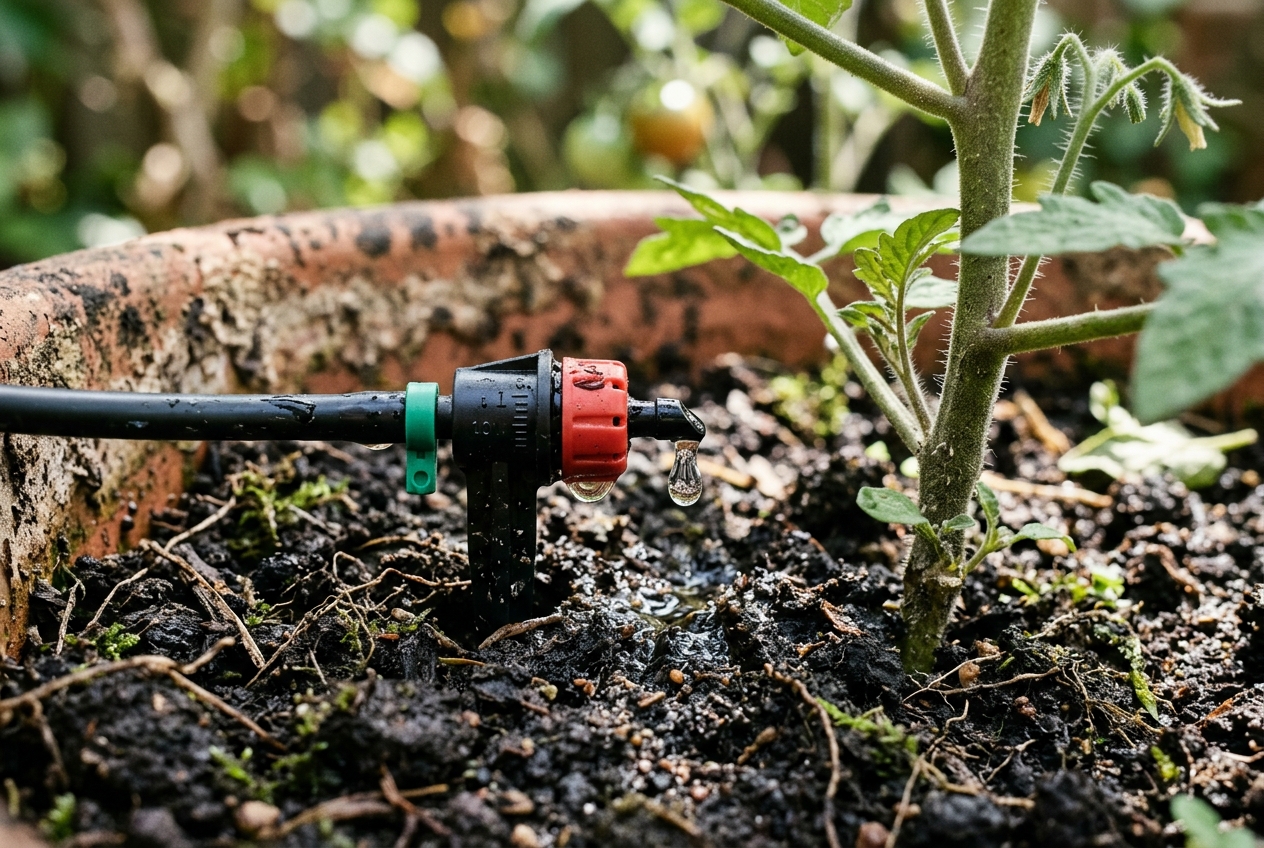
Before you buy one, watch out for these two critical specs: – Pump Lift Height: If your water bucket sits on the deck floor but your pots sit on a top tier shelf 6 feet up, that pump needs enough pressure head to push water uphill. A weak pump leaves top pots bone dry. – Battery Capacity: What happens when an overcast storm rolls in for a week? The solar panel barely trickles. If the battery (mAh rating) is tiny, the system dies. A decent battery bank keeps watering even during gloomy stretches.
Does it actually pay for itself? Think about it: lose one mature oleander or a couple of decorative shrubs, and you’ve already lost more cash than this entire kit costs. Plus, you don’t burn gas rushing out to the cabin on a Wednesday evening just to water the tomatoes. And drip delivers roughly 70% water savings compared to dumping watering cans over dry topsoil.
If you don’t feel like holding a plant funeral every August, this thing is a genuine lifesaver.
Which Kit Should You Pick? (Field-Tested Recommendations)
There is plenty of cheap junk on the market that craps out after ten days. If you want reliability, stick to these categories based on your setup:
1. For Small Balconies (10–15 pots): The Simple “Plug & Play” Solar Kit An all-in-one compact unit that clips right onto the rim of your bucket. Turn the dial on the back to set frequency and run time, and walk away. Uncomplicated, sturdy, and reliable. 👉 [Your Affiliate Link Goes Here]
2. For Smart Control Lovers: RainPoint Solar WiFi System If you want total visibility, setups like the RainPoint solar hub come with smartphone app controls. You can check battery levels remotely and trigger extra water cycles from the beach if heatwave alerts hit. 👉 [Your Affiliate Link Goes Here]
3. For Large Cabins & Raised Beds (30+ drippers): Heavy-Duty Solar Pump (e.g. Esotec Water Drops) If you’re running extensive lines from a 50-gallon rain barrel, you need real pump muscle with a separate, high-output solar panel. These push water across 60+ feet of line without losing pressure. Built like a tank. 👉 [Your Affiliate Link Goes Here]